
An ADHD study skills plan for high schoolers works by building structure in four areas: environment setup (distraction-free workspace), time management (short work blocks with scheduled breaks), organization systems (external checklists and digital reminders), and accountability (a consistent check-in person or tutor). A 30-day plan introduces one new habit per week so the ADHD brain can build consistency without overwhelm. Florida high schoolers managing Bright Futures GPA requirements or NCAA eligibility minimums benefit most from plans that synchronize with their school calendar.
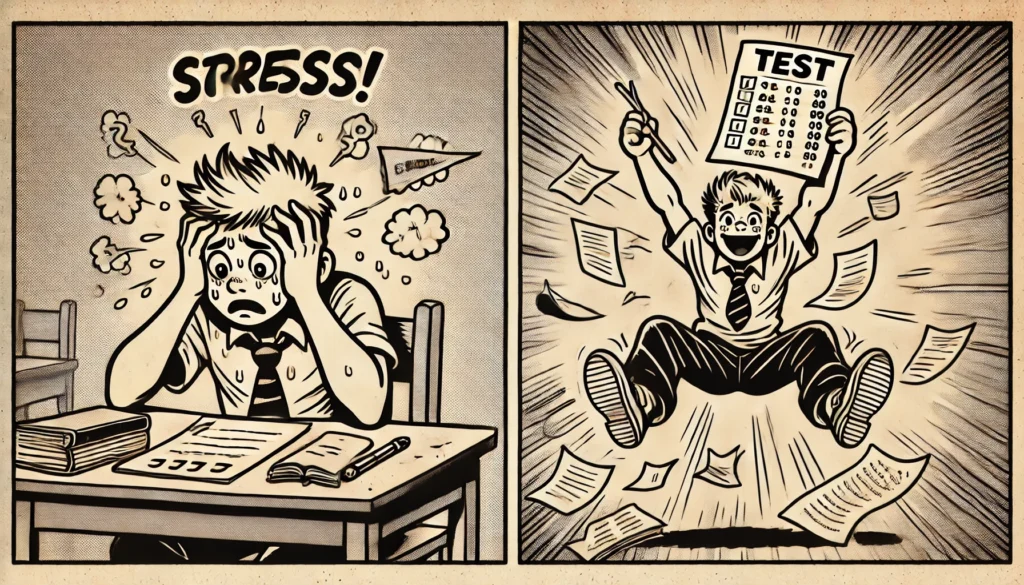
Your student is not lazy. ADHD is a real, neurological difference in how the brain manages attention, time, and working memory — and the standard “sit down and focus” advice does not work for an ADHD learner. What does work is structure: a predictable daily system that offloads the organizational burden from a brain that struggles with it and replaces willpower with routine. This plan was built from real tutoring sessions with ADHD high schoolers in Orlando, Winter Park, and Lake Nona — students navigating the same pressures your family faces: Bright Futures GPA targets, semester finals, and in many cases, NCAA eligibility requirements that don’t pause for executive function challenges.
The ADHD brain has difficulty initiating new habits when they require multi-step planning in working memory. A 30-day structure works because it introduces one new system per week — small enough for the brain to sustain, long enough to create a real routine. Each phase builds on the last, so by Day 30 your student has four interconnected habits running automatically rather than trying to implement everything at once and failing by Day 3.
Create a dedicated, distraction-minimized study space. Remove visual clutter. Establish a consistent study location. The ADHD brain struggles to transition into "study mode" without environmental cues – the physical space becomes the trigger. Week 1 is entirely preparation: no new academic work is added to routine yet.
Introduce the Pomodoro-style time block: 25 minutes of focused work, 5-minute break, repeat. Use a visible timer (not a phone). Add a daily homework checklist in a physical planner or whiteboard. ADHD students cannot rely on internal time perception – the external timer replaces the skill they lack.
Build the assignment tracking system: one master list of all outstanding assignments with due dates, updated every evening. Add Google Calendar or a paper planner for test dates. Color-code by subject. ADHD students lose points disproportionately on forgotten assignments – the organization system prevents this without requiring better memory.
Add a daily 5-minute check-in with a parent, tutor, or accountability partner. Review: What did I complete today? What is due tomorrow? ADHD students struggle with self-monitoring – the external check-in replaces self-accountability. This is the phase most often skipped, and the phase most correlated with long-term success.
Day 1–2: Identify a single dedicated study spot — desk, dining table, or library. Remove all non-study items. Day 3–4: Add one visual cue that signals "study time" (a specific lamp, a desk mat, headphones). Day 5–7: Establish a fixed study start time that works with your school and sport schedule. Consistency of time and place is the single biggest predictor of ADHD study success.
Day 8–9: Set a physical timer (not your phone) for 25 minutes. Start one assignment. When the timer rings, take 5 minutes away from the desk. Day 10–11: Create a daily homework checklist — every assignment written down before you begin. Day 12–14: Add a "brain dump" to your morning routine: write every task you remember needing to do. This clears working memory so the ADHD brain can focus on the task at hand.
Day 15–16: Create a master assignment tracker — one place where every outstanding assignment lives with its due date. Google Sheets, a physical notebook, or a whiteboard all work equally well. Day 17–19: Add your test and quiz dates for the next 30 days to a calendar. Color-code by subject. Day 20–21: Set up one recurring phone alarm for each evening at the time you review tomorrow's assignments. For Florida high schoolers, include Bright Futures-relevant coursework in your tracker so you can monitor your GPA trajectory in real time.
Day 22–24: Identify your accountability partner — a parent, a tutor, or a trusted friend. Day 25–27: Schedule a 5-minute daily check-in at the same time each day (after dinner works well for most families). Review: Did I complete what I planned? What is due tomorrow? Day 28–30: Review the full month. Which of the four systems is working? Which needs adjustment? Most ADHD students find Week 3 (organization) hardest to sustain — if that is true for your student, this is the area where a tutor adds the most immediate value.
| FLORIDA REQUIREMENT | GPA THRESHOLD | ADHD RISK POINT |
|---|---|---|
| Bright Futures — Medallion Scholar | 3.5 cumulative | Missed assignments, poor test prep lower GPA below threshold |
| Bright Futures — Academic Scholar | 3.0 cumulative | Time management failures during finals season are the primary risk |
| NCAA Division I Eligibility | 2.3 core-course GPA | Organization failures cause incomplete coursework; coaches monitor in real time |
| NCAA Division II Eligibility | 2.2 core-course GPA | Lower threshold but same ADHD failure patterns apply |
ADHD students have reduced working memory — the brain’s “mental scratch pad.” External tools replace what the brain cannot hold: physical checklists, whiteboard walls, sticky-note systems. The rule: if it is not written down visibly, it does not exist. Digital apps (Todoist, Notion) work for tech-comfortable students; physical tools work better for students who need tactile engagement.
ADHD creates “time blindness” — the inability to accurately sense how much time has passed or remains. Tools: a Time Timer (visual countdown clock), a physical planner with 30-minute blocks, or the Forest app for phone-free focus sessions. The strategy is to make time visible and external, not a mental estimate.
Starting tasks is often harder than completing them for ADHD students — the brain struggles to override “task inertia.” The two-minute rule (if it takes under 2 minutes, do it now) and “body doubling” (studying alongside a tutor, parent, or peer) are the highest-evidence strategies for overcoming initiation barriers. InLighten’s sessions are structured specifically to provide the body-doubling environment that ADHD students need.
Lost assignments and missed deadlines are the primary academic consequence of ADHD — not poor understanding of content. A master assignment tracker (one centralized list, reviewed daily) eliminates this failure pattern. For Florida high schoolers, this tracker should include all Bright Futures-eligible coursework and any NCAA core courses so GPA trajectory is monitored proactively, not discovered at semester end.
The most effective parent role in an ADHD study plan is structural: you maintain the daily 5-minute check-in, you help prepare the study environment, and you enforce the consistent start time. You are not the homework-checker or the grade-monitor — that role creates conflict and erodes the parent-child relationship without improving academic performance. Let the tutor be the academic authority. You are the consistency anchor.
The plan will break during high-stress periods: semester exam weeks, tournament weekends, and FAFSA/college application deadlines. When it breaks, restart the next day with the system that was working — do not restart from Week 1. A one-day disruption is normal; a three-day disruption is a signal to add external support (tutoring, check-ins with a school counselor, or a structured study session). For student-athletes, coordinate the plan restart with their coach's schedule, not against it.
Consider professional tutoring support when: (1) the accountability check-in is consistently contentious, (2) the student is still losing points on assignments despite having an organization system, or (3) the student's Bright Futures GPA trajectory shows a downward slope entering junior year — the window for correction before scholarship calculations tightens. InLighten's tutors in Orlando and Winter Park specialize in building ADHD study systems alongside the academic content work, so your student builds the skill and the grade simultaneously.
Yes — when it is structured correctly. A 30-day plan works because it introduces one new habit per week rather than asking an ADHD brain to sustain multiple new behaviors simultaneously. Research on executive function and ADHD confirms that external structure is more effective than willpower-based approaches. The four-phase framework (environment, time, organization, accountability) addresses the specific executive function deficits — not just study habits generally.
ADHD does not disqualify a student from Bright Futures — but it creates specific GPA risks that unmanaged students often experience: missed assignments that could not be recovered, poor test performance due to inadequate study time, and organizational failures that accumulate across multiple courses. The Medallion Scholar threshold of 3.5 GPA is achievable for most ADHD students with a structured study skills system in place. InLighten’s tutors in Orlando work specifically with ADHD students navigating Bright Futures requirements.
For Florida student-athletes with ADHD, the three highest-priority study skills are: (1) assignment tracking and deadline management — athletic schedules create irregular study patterns that make passive memory unreliable, (2) time-block planning that accounts for practice, travel, and game days, and (3) a daily academic check-in to maintain the accountability loop when a coach or parent cannot be present. NCAA eligibility requires monitoring core-course GPA in real time — a master assignment tracker makes this possible without adding stress to an already full schedule.
Standard study tips assume a brain that can self-monitor time, hold tasks in working memory, and initiate work without external prompts. ADHD study plans replace those internal functions with external systems: visible timers instead of internal time perception, written checklists instead of working memory, and accountability partners instead of self-monitoring. The difference is not strategy — it is the recognition that the ADHD brain needs to offload executive function to external tools rather than improve it through willpower.
Yes. InLighten’s certified tutors in Orlando, Winter Park, and Lake Nona work with ADHD high schoolers to implement structured study skills plans alongside academic content tutoring — so your student builds the organizational system and improves their grades simultaneously. We assess exactly where the current system is failing (missed assignments, test prep gaps, time management) and build a customized plan targeting those specific areas. Book a free academic assessment to start.